
A GUIDED JOURNEY THROUGH HISTORY
Japanese Photography Magazines: 1880s to 1980s
As interest in Japanese photography continues to grow, “Japanese Photography Magazines: 1880s to 1980s” offers readers the comprehensive historical context that connects today's celebrated works to their rich origins, transforming appreciation into genuine understanding.
Ships within 2-3 business days
from within the United States
For institutions requiring tax exemption or specialized invoicing.
THE THESIS
Discover a Century of Japanese
Photography Through Its Iconic
Magazines.
To understand Japanese photography, one must look away from the gallery wall and towards the printed page. "Japanese Photography Magazines: 1880s to 1980s" offers an in-depth journey through this unique history.
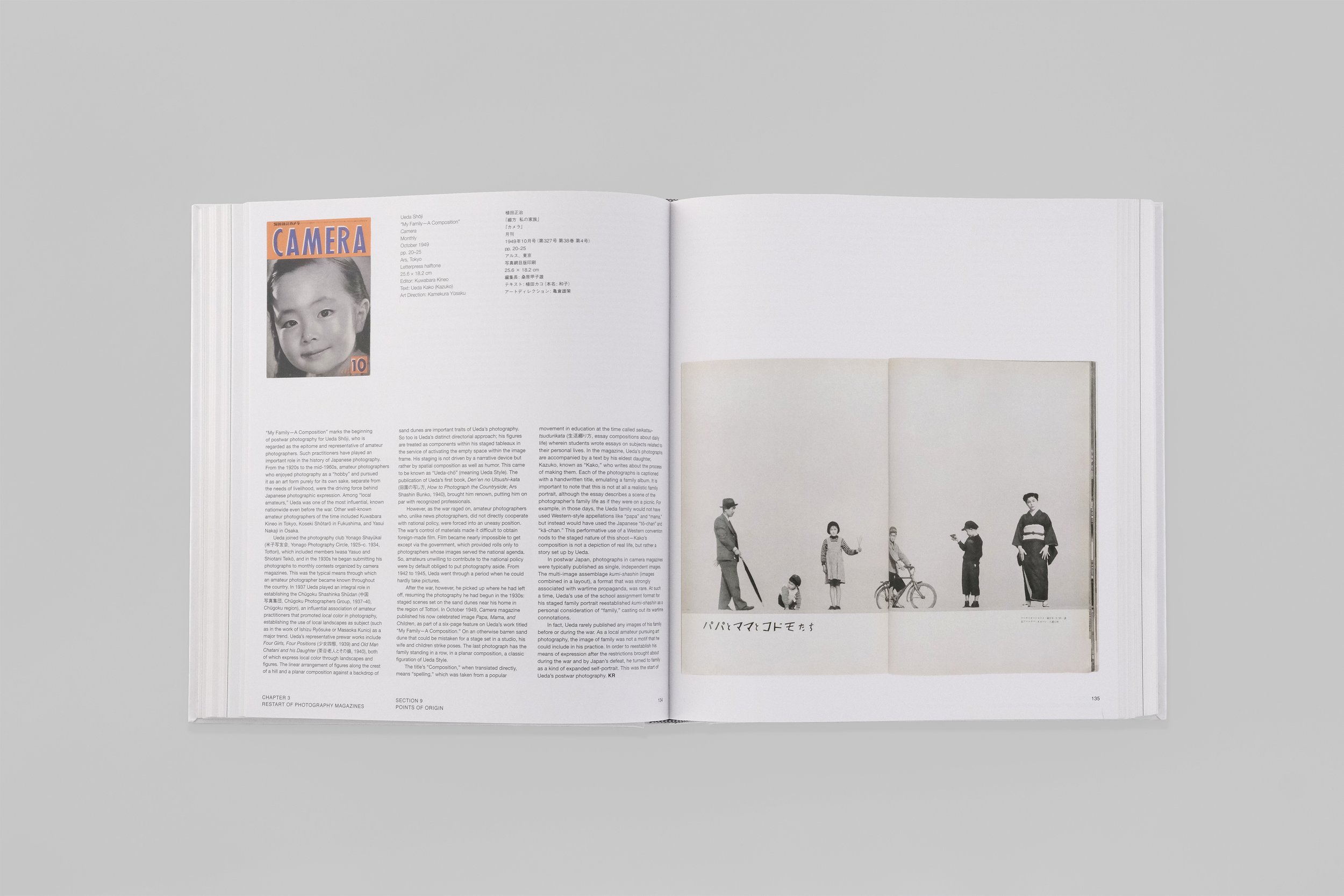
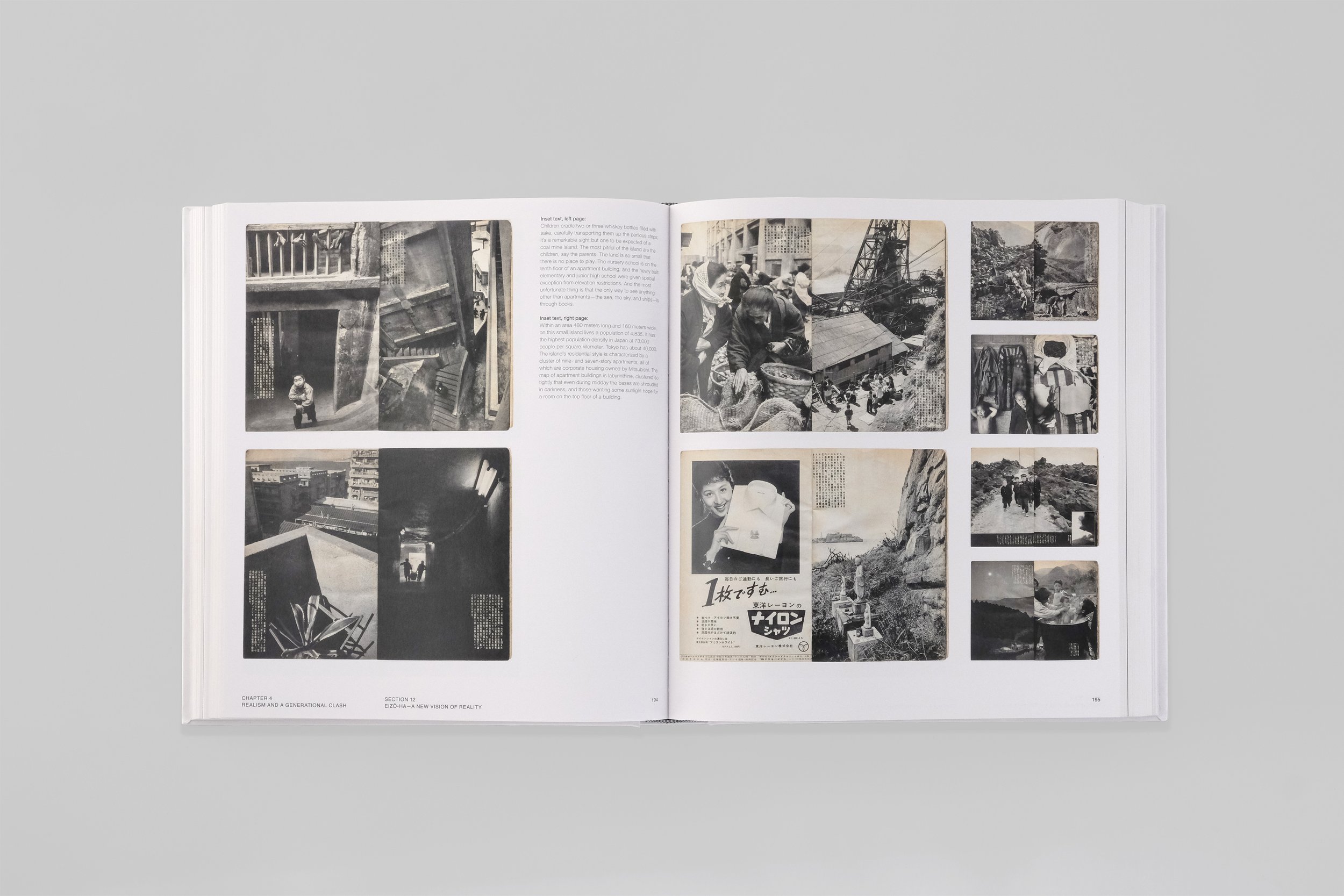
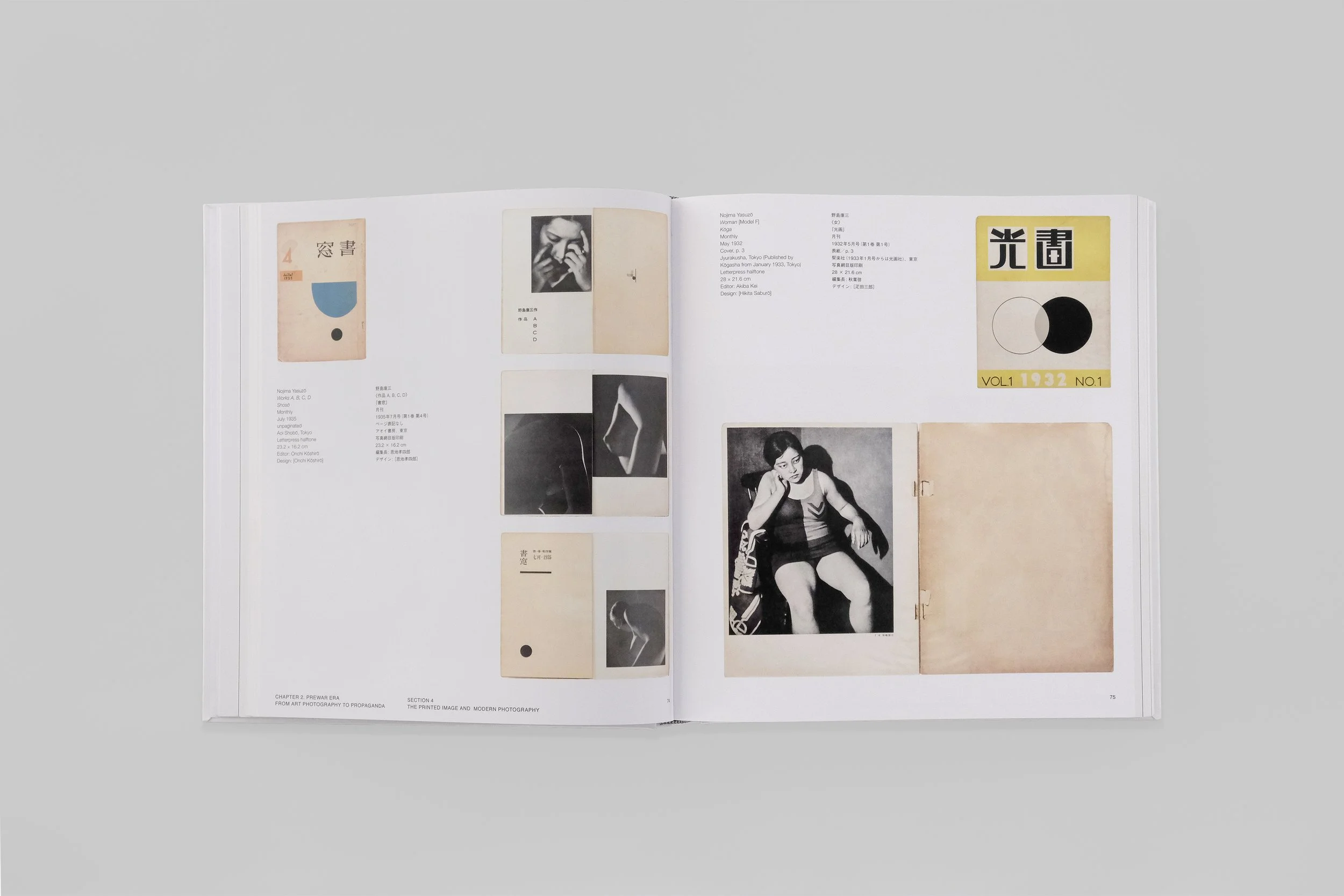
Meticulously researched and visually rich, this volume moves beyond Western narratives to reveal the unique evolution of Japan's photo magazine culture—from the experimental visions of prewar surrealism to the gritty photojournalism of the post-war era.
“An expansive new book charts Japan’s unparalleled history of photography in print.”
WHAT’S INSIDE
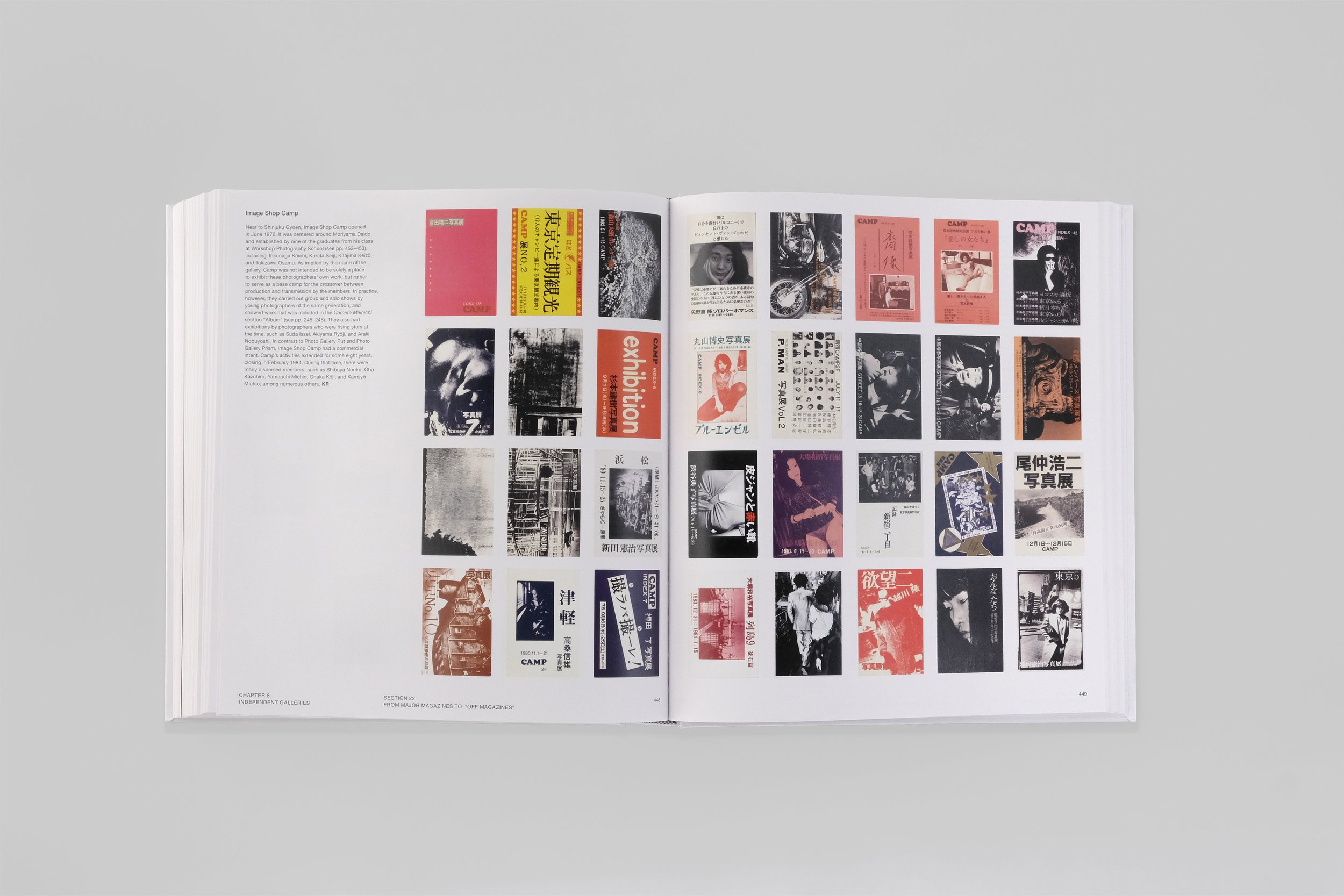
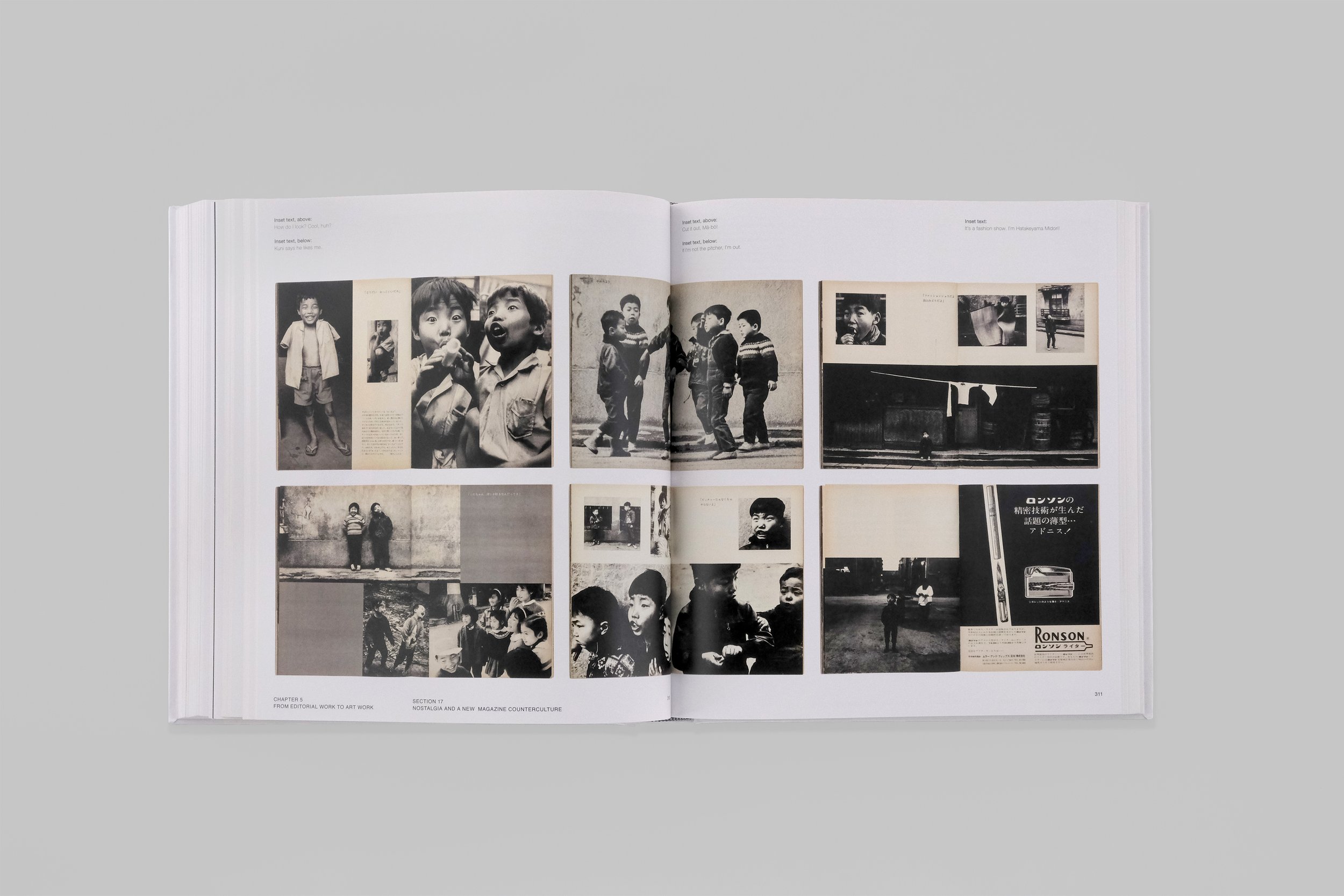
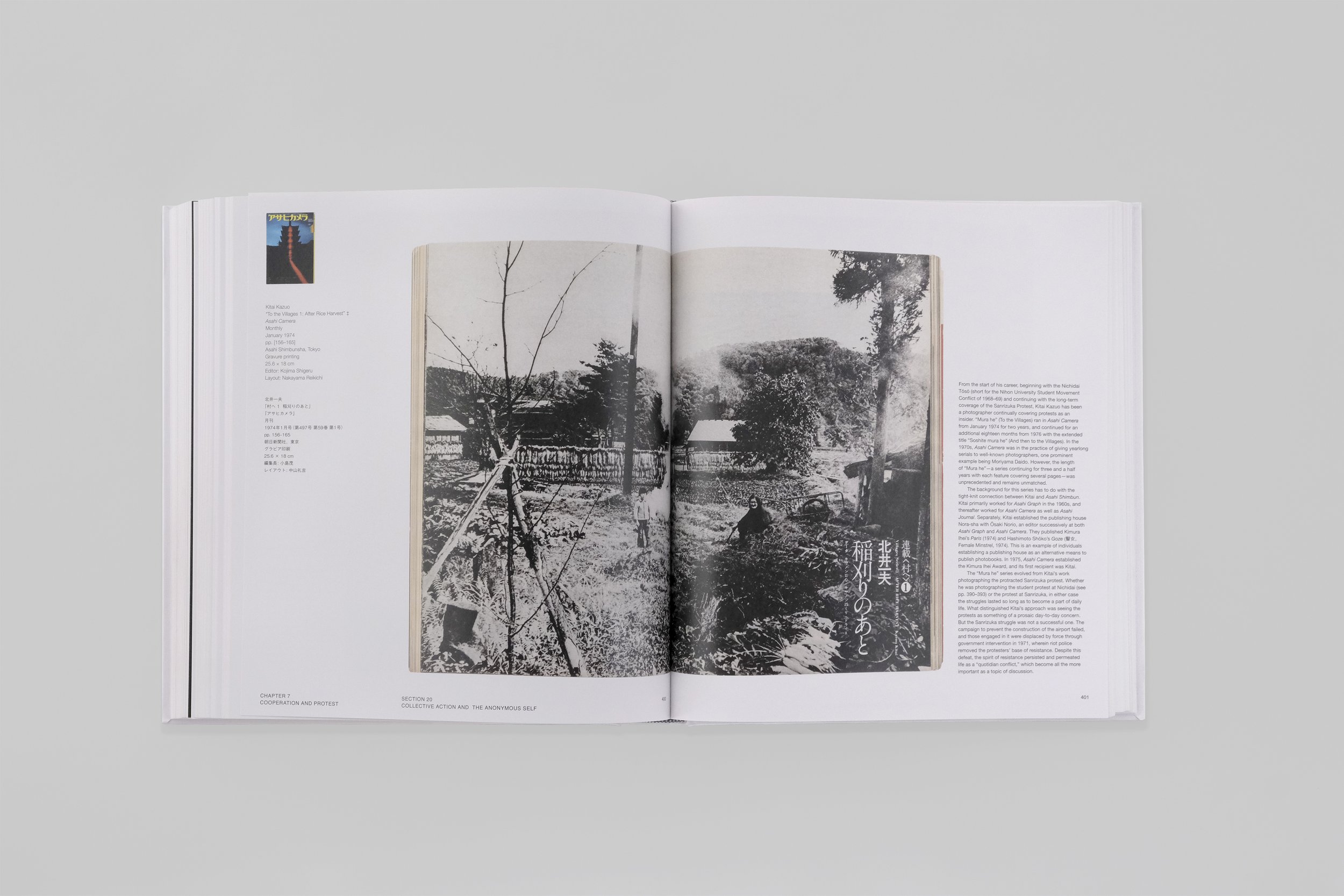
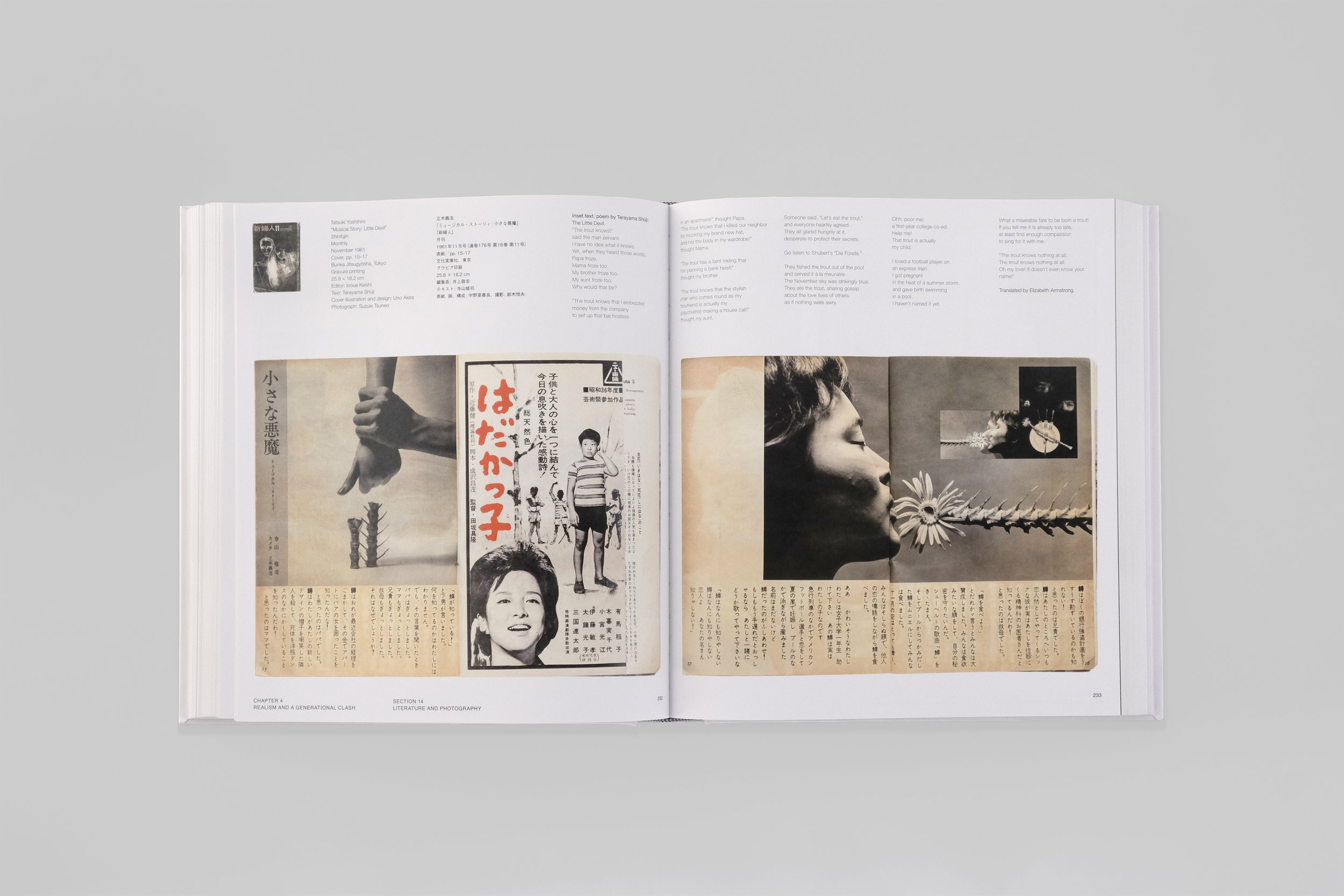
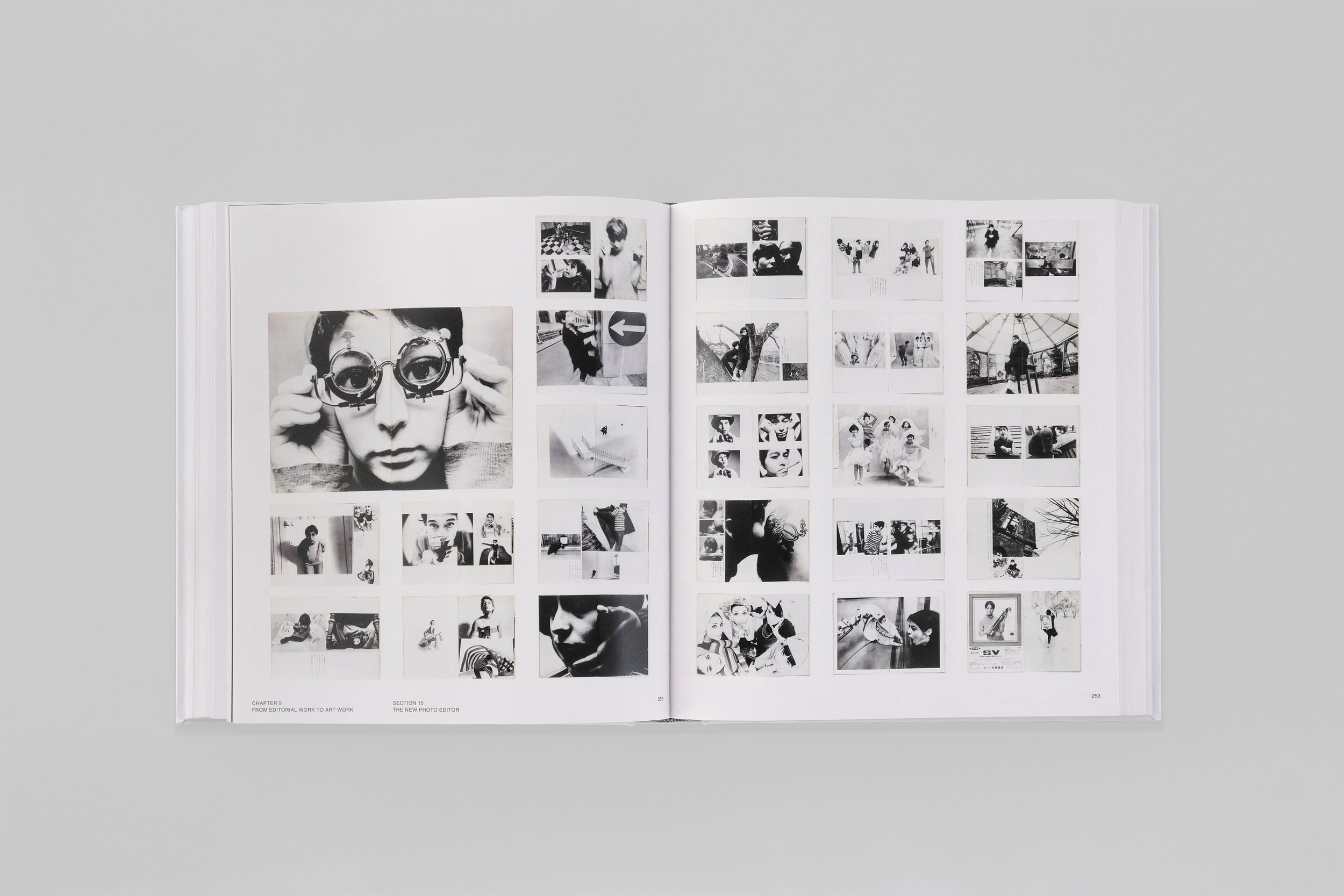
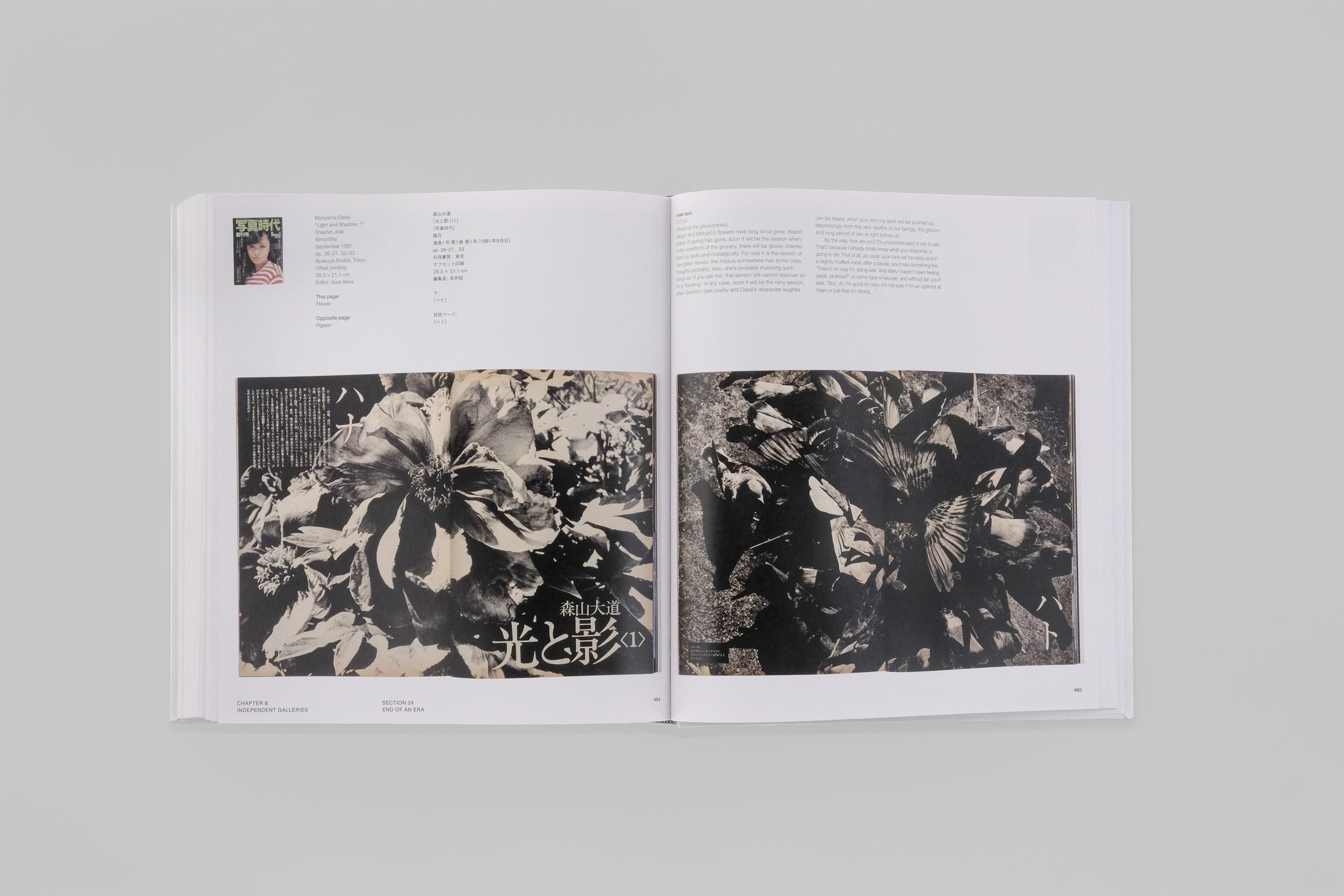
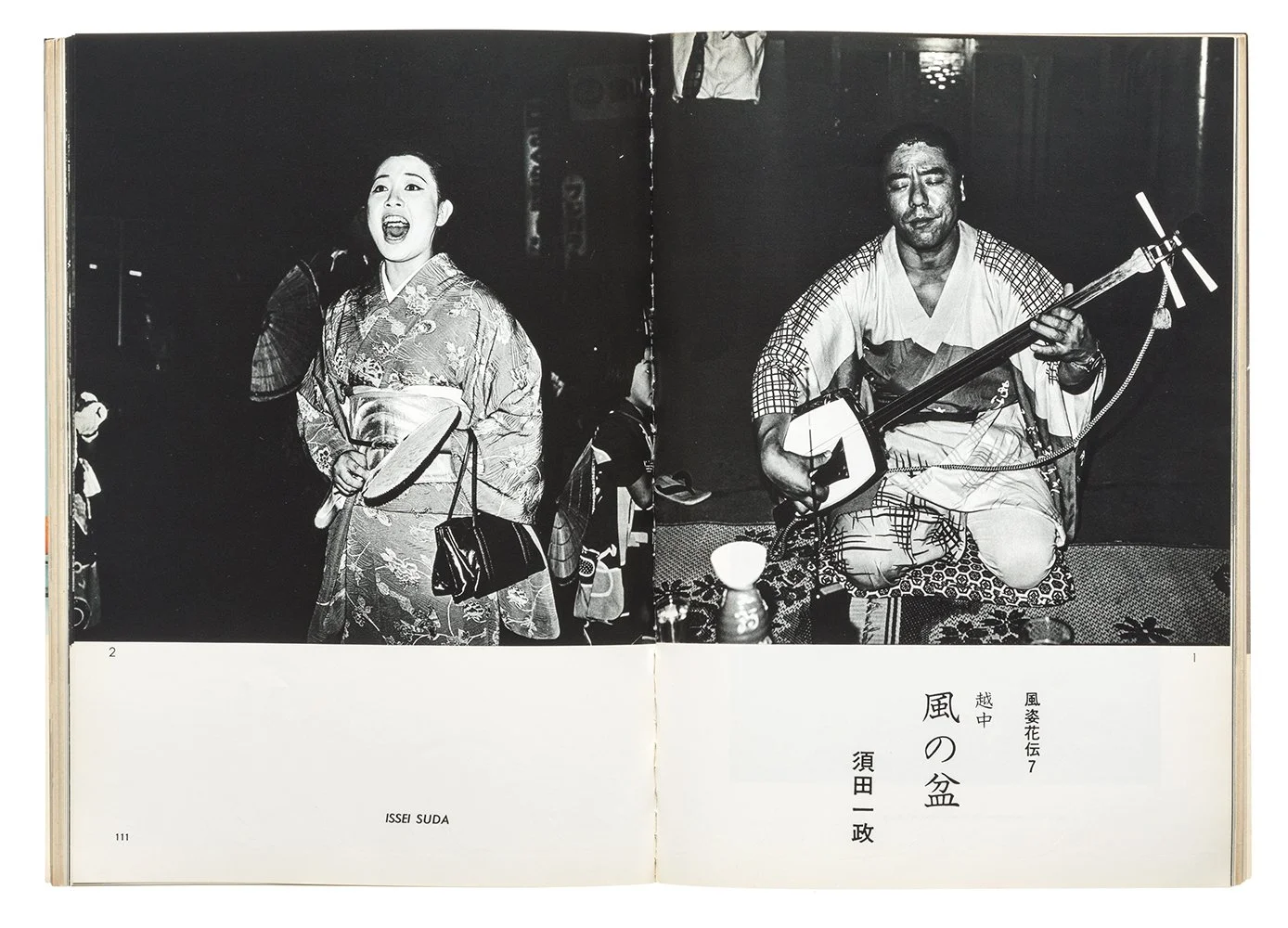
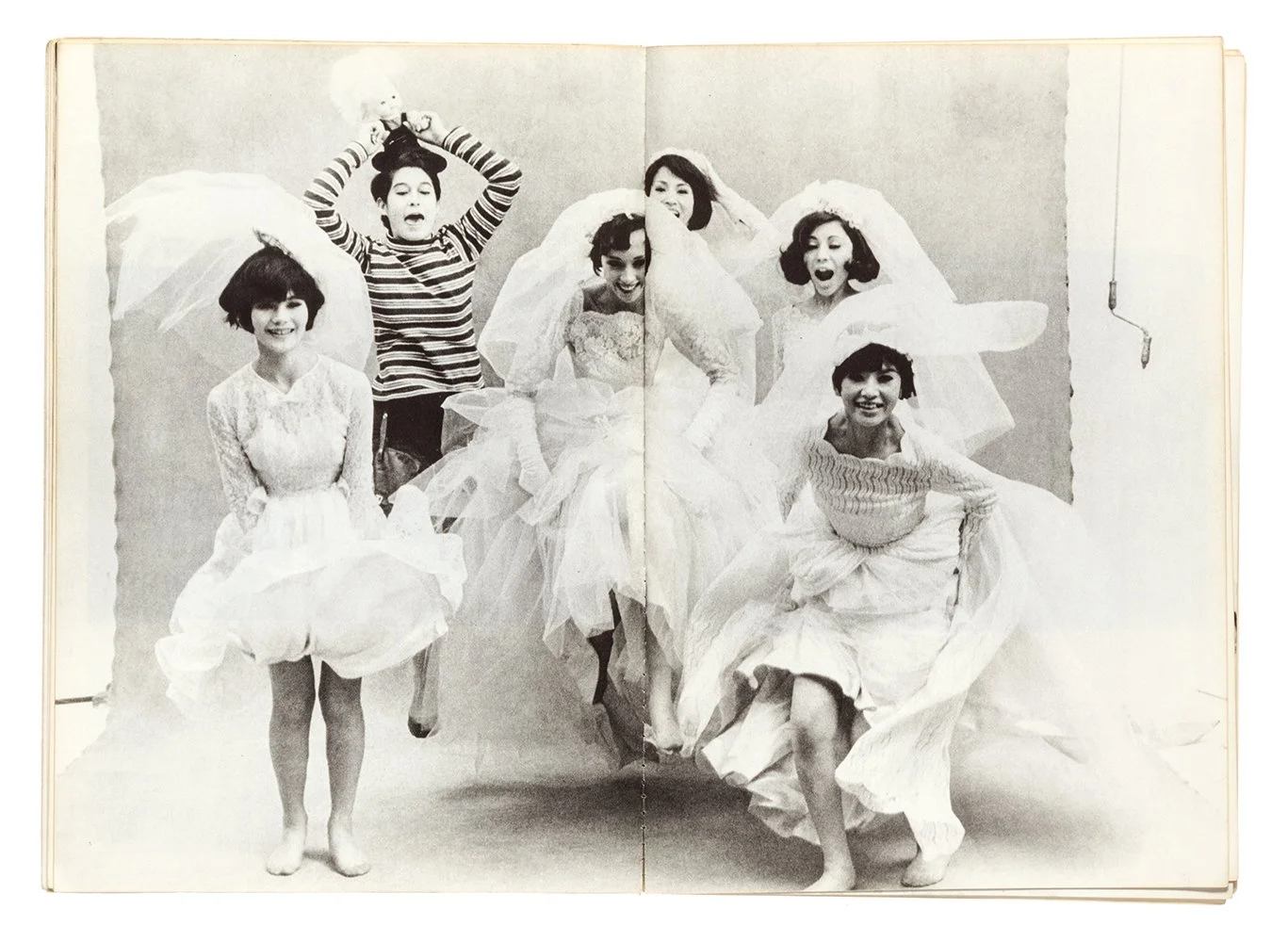
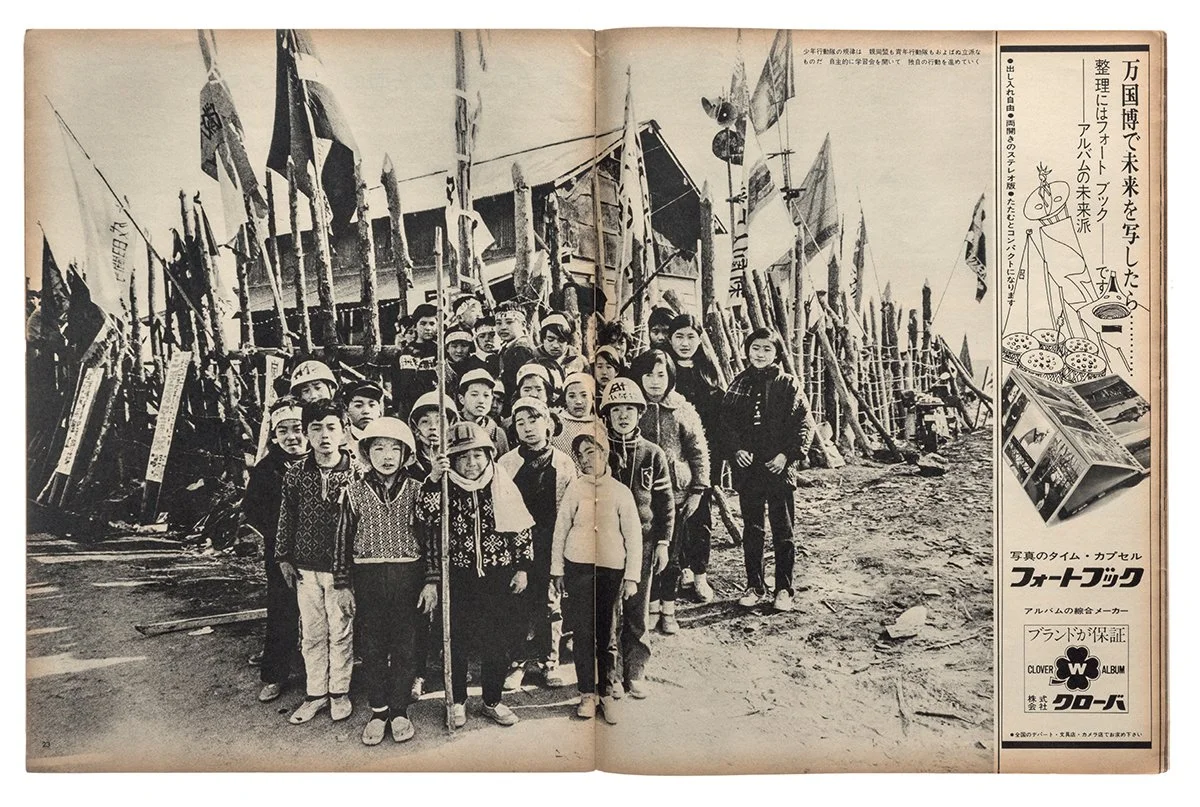
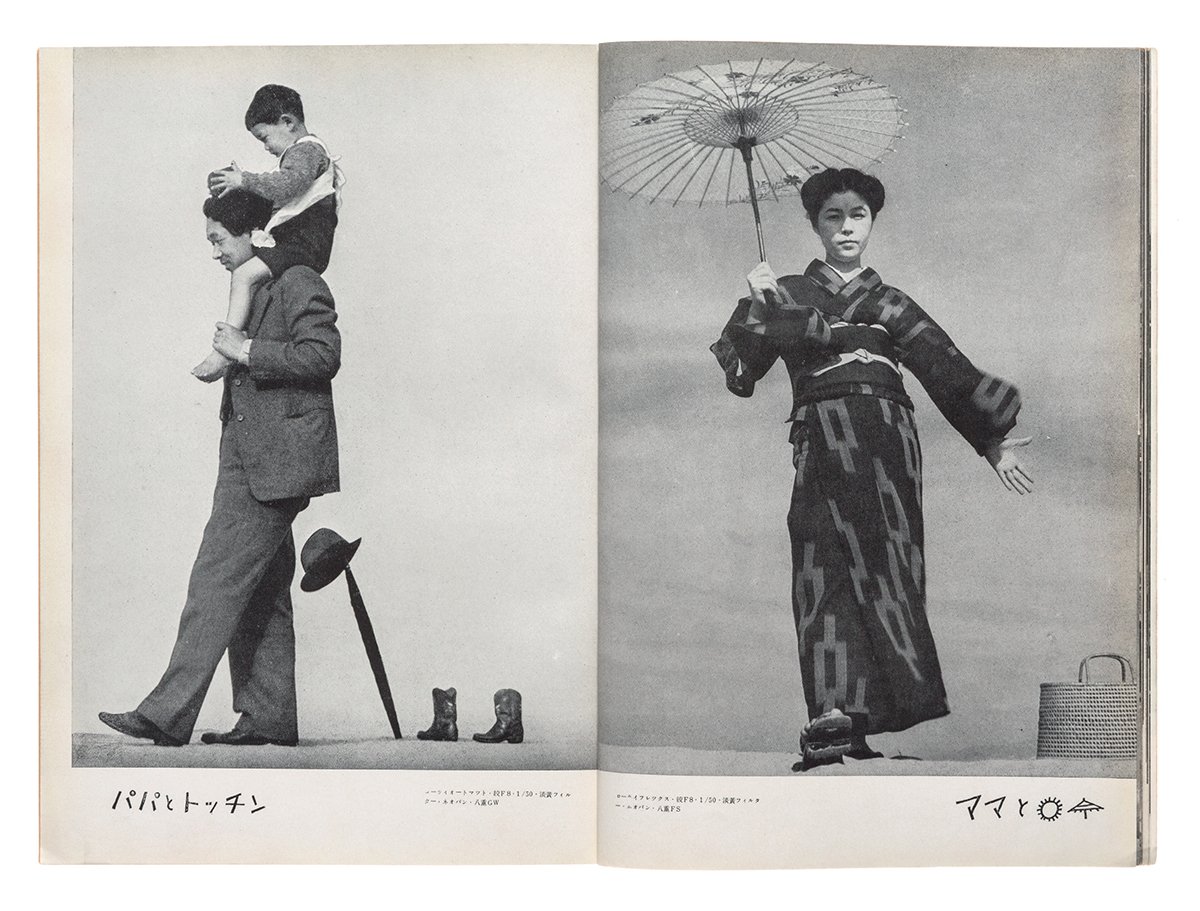
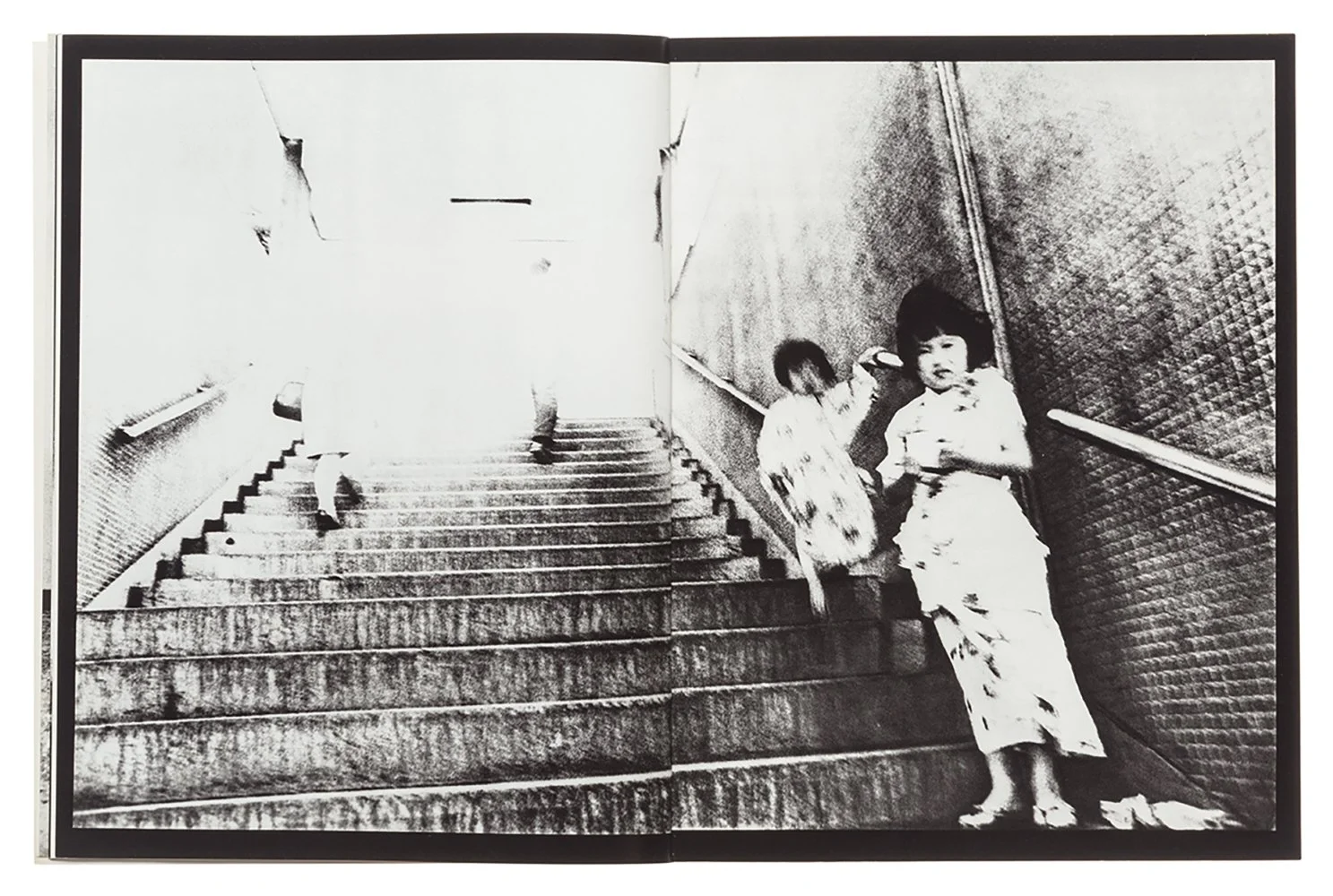
1,500+ Illustrations. Full reproductions of iconic magazine feature stories and rare photographs.
Primary Texts. Translated essays and critical writings that illuminate the photographers' creative visions.
Comprehensive History. From Shashin Shinbun (1887) to Provoke (1968) and the independent movements of the 80s.








THE ARTIFACT
Built for the Archive
We approached the production of this book not as a publication, but as an exhibition in print. Every material choice was made to ensure the fidelity of the images and the longevity of the object.
Heavyweight 150gsm Paper
We selected Munken Lynx for its high opacity and natural white shade. It provides the perfect surface for the deep, rich blacks.
Color Correction
All the photography in the publication was done by one studio team with consistent shoot conditions, thereby establish high color fidelity.
Smyth-Sewn Binding
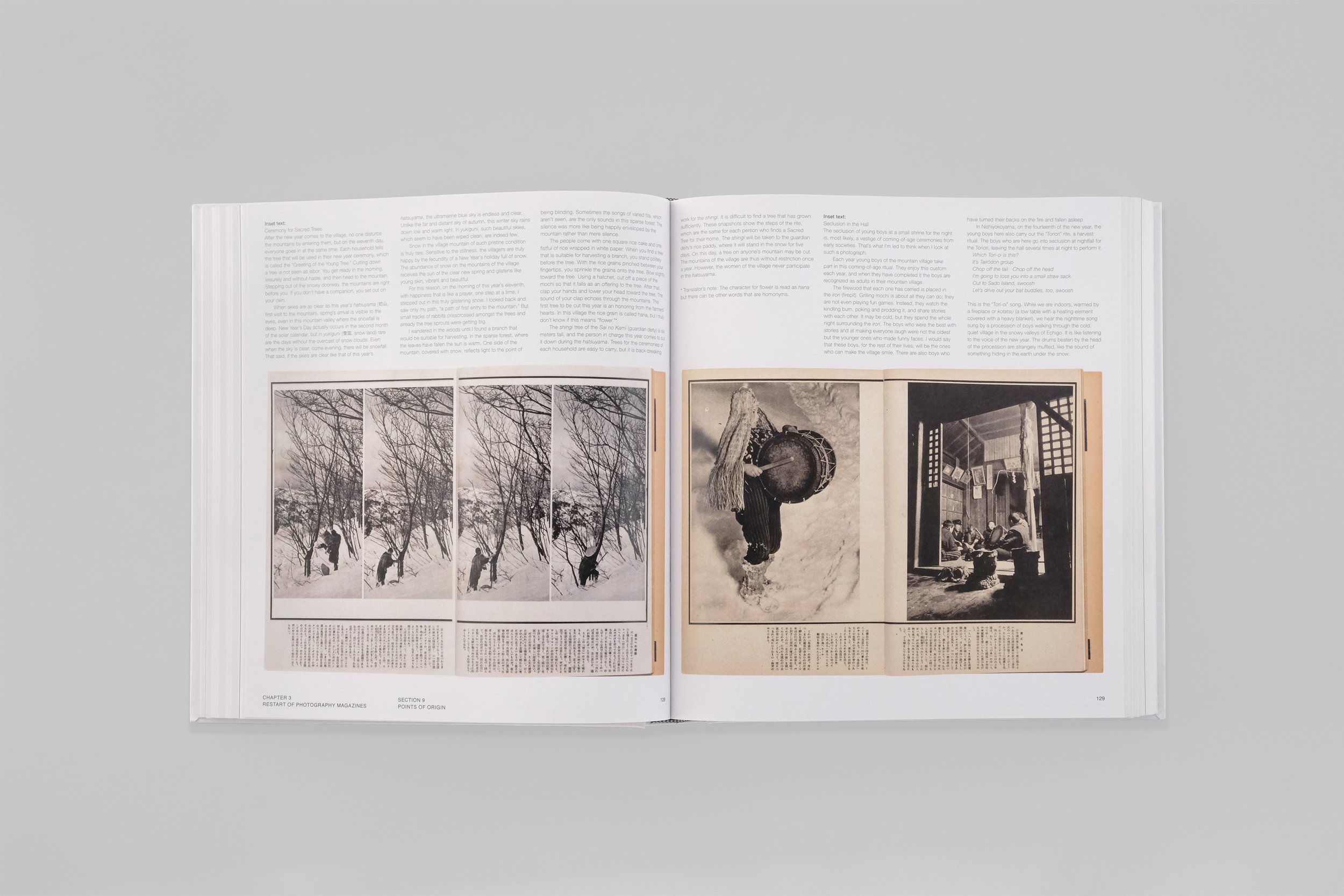
A reference book must be usable. Our binding allows the book to lay completely flat on a desk without cracking the spine, allowing images that span across spreads to be viewed seamlessly.
A Sourcebook For The Arts
Essential for Visual Arts Libraries
Whether you are behind the lens, in the classroom, or designing for print,
this volume serves as a rich resource for understanding h
ow images shape culture.
For Visual Inspiration
Photographers, Designers, & Artists: Break out of algorithmic feeds. Discover 100 years of avant-garde layout, experimental typography, and radical sequencing that challenged the status quo.
Analyze editorial pacing from the masters
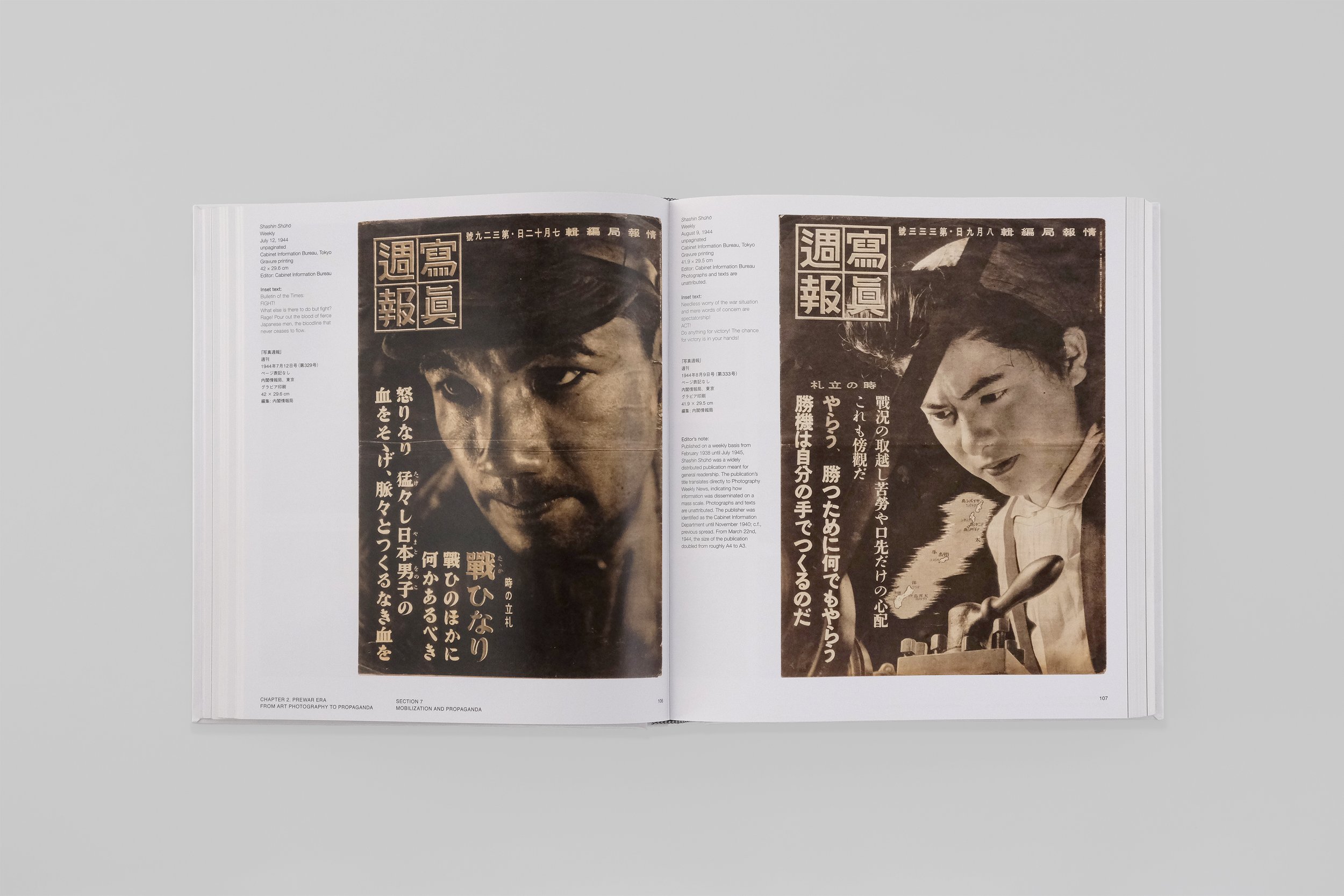
Study typography usage in 1930s propaganda
For Academic Context
Educators, Students, & Historians: A complete curriculum in one volume. Move beyond the "Great Man" theory of history and understand the ecosystems—the editors, critics, and printers—that made the work possible.
Includes primary source translations
Comparative timelines of Western vs. Eastern movements
For Institutional Reference
Librarians, Archivists, & Curators: The only English-language resource to comprehensively index this era. Fill the gaps in your collection with authoritative data on publication dates, formats, and editorial tenures.
For Global Perspective
Enthusiasts & Japanophiles: See Japan's history not through textbooks, but through the eyes of its artists. Witness the modernization of Tokyo, the post-war reconstruction, and the avant-garde boom of the 70s.
“Magazines are not unlike photography itself: unruly, energetic, ephemeral and largely disposable. They carry and express the spirit of their moment like nothing else. This major study of Japanese photography magazines, produced with the greatest care and expertise, captures what it was that made the country’s visual sensibility so rich and so special. Alongside portfolios by the great names, published before their famous books, there is fascinating work by brilliant but forgotten image makers, along with writing and design that is just as vital. This is a landmark publication, allowing us to see a visual culture develop, explore and expand in real time, across a century of enormous change. ”
Selected Highlights of Japanese Photography Magazines: 1880s to 1980s:
Social change and identity: See the evolution of Japan’s sense of self through student protests, counterculture movements, social studies of ancient rituals, and a changing landscape in the work of Hiroshi Hamaya, Shomei Tomatsu, Ikko Narahara, Kazuo Kitai, and Koji Taki.
Experimental visions: Delve into avant-garde styles, from abstract surrealism of prewar Japan to gritty photojournalism, represented by masters like Ken Domon and Ihei Kimura.
Technical advancements: Discover the impact of W.W.II on the development of Japan’s camera manufacturing and magazine industry.
The “Eizo-ha” generation: Learn about postwar photographers who presented a new relationship with images as well as cross-disciplinary approaches to Butoh dance and literature.
Independence: Get to know how photographers independently produced magazines and organized exhibition spaces in the 70s & 80s, forming small collectives that changed the course of photography.
Influential voices: Read translated writings by photographers, critics, and poets like Eikoh Hosoe, Shuji Terayama, and Shuntaro Tanikawa, offering insights into the creative discourse.
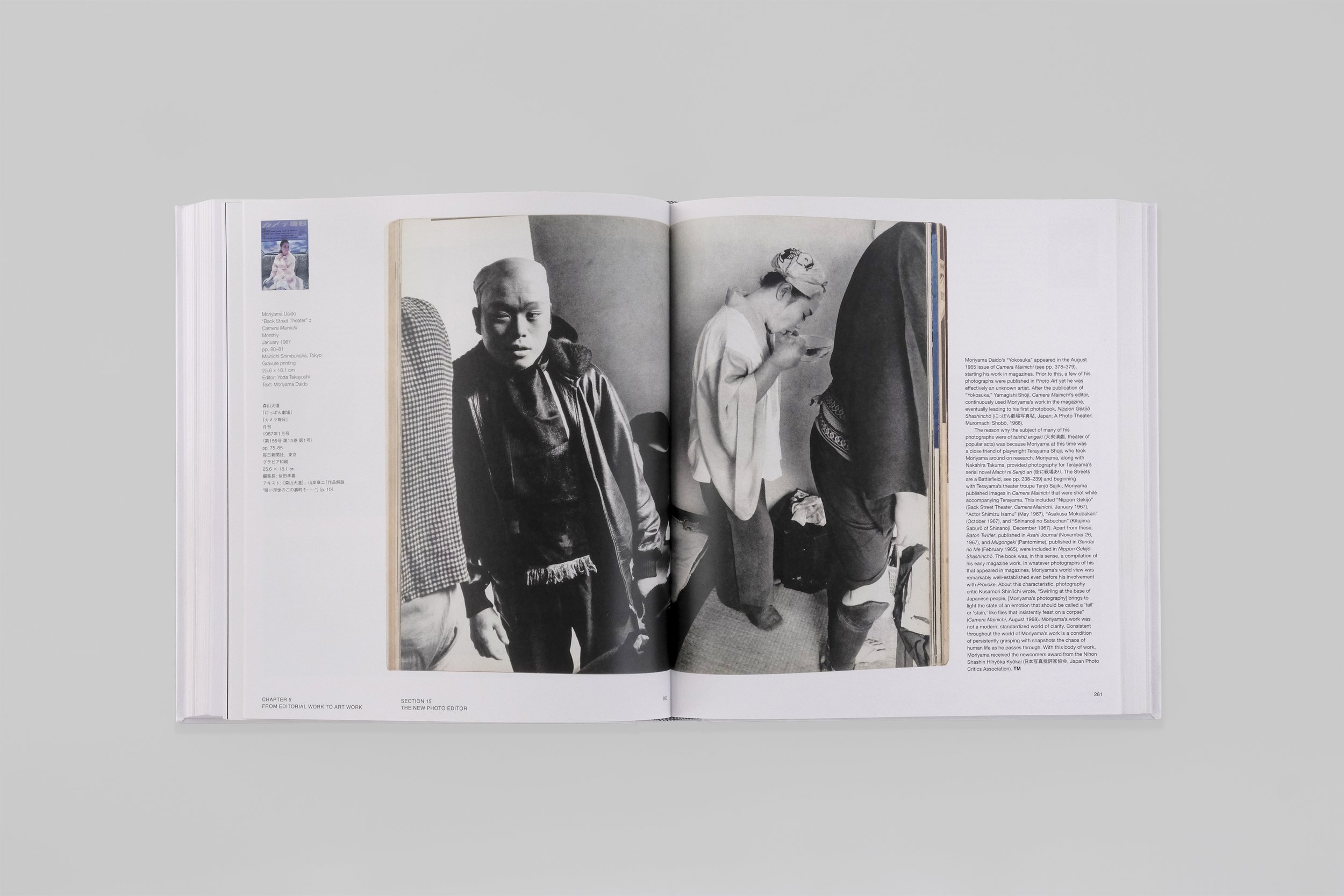
Provoke’s B-side: Discover how the collective produced another publication, with contributions from Daido Moriyama, Takuma Nakahira, and Yutaka Takanashi.
Art and activism in Japan - Connects photography and magazines to social and political movements.
Landmark publications: Immerse yourself in the pages of seminal magazines like Shashin Shinbun (1887), Asahi Graph (1923), Camera Mainichi (1956), and Provoke (1968), experiencing the evolution of visual storytelling and editorial design.
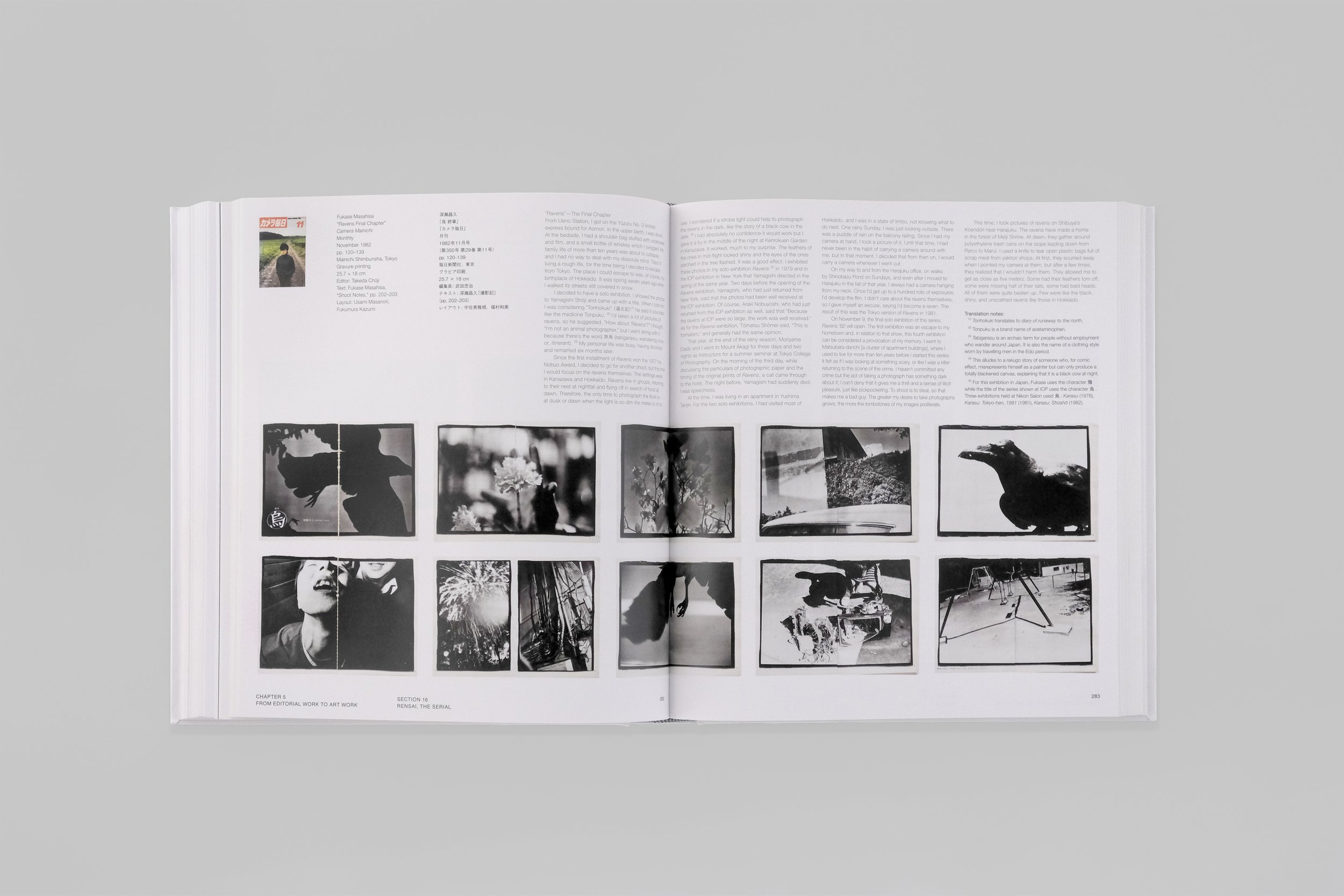
Comprehensive: Experience complete reproductions of iconic works, including a full reproduction of Masahisa Fukase’s "Ravens," complete with authorized translations of his accompanying texts.

Japanese Photography Magazines: 1880s to 1980s is a one-hundred-year history told through camera and photography magazines. With over 1,500 illustrations, this book shows how magazines continually served as a genre-defining platform.
ISBN: 978-4991276101
Hardcover, 28 x 25 cm (11.02 x 9.84 inches)
500 Pages, over 1,500+ color images, 3.04kg (6.7 lbs.)
Words: approx. 200,000 words in English
Captions: Bilingual in English and Japanese
RELATED BOOK
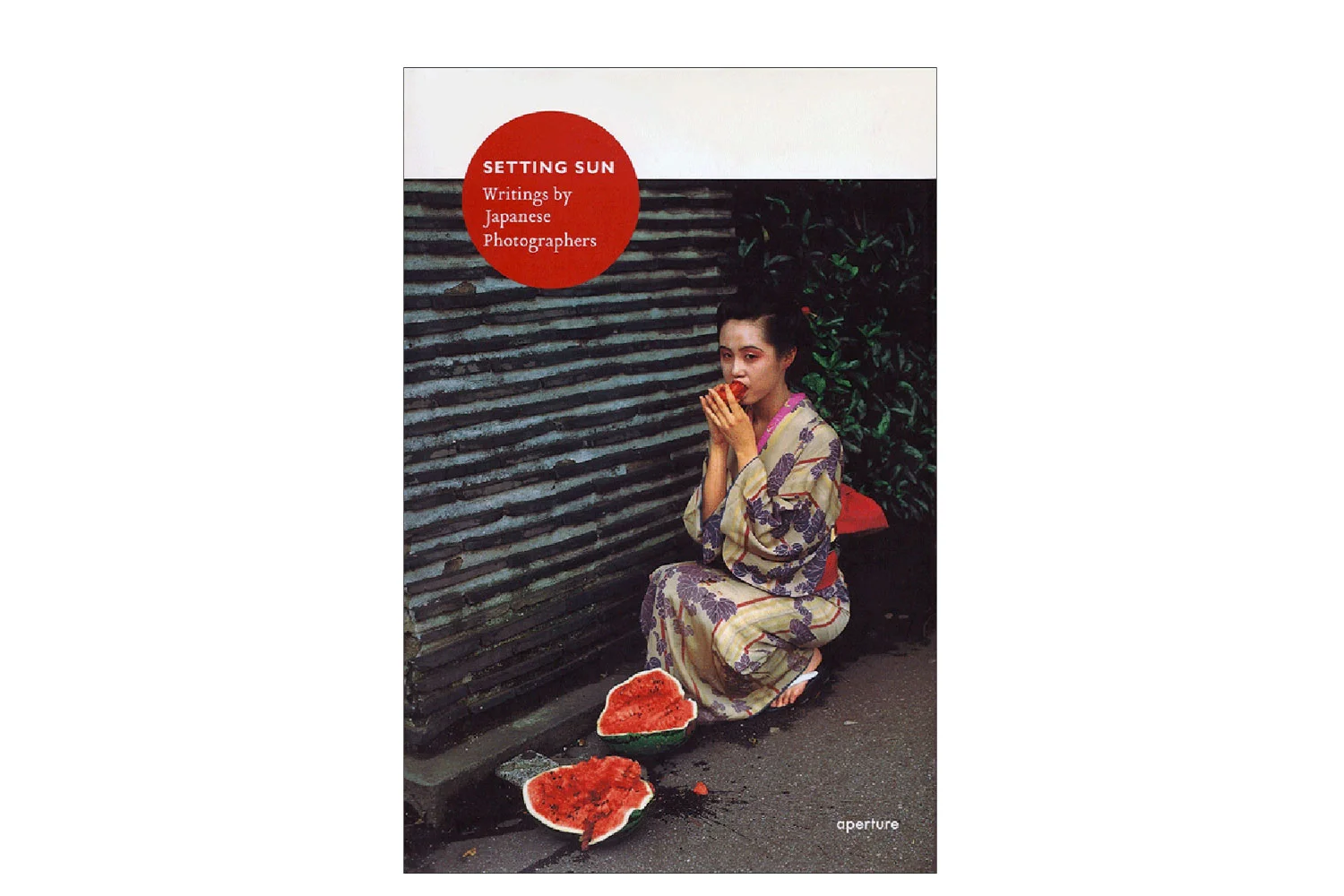
Edited by Ivan Vartanian, Akihiro Hatanaka and Yutaka Kanbayashi
Published by Aperture
November 2005
21.3 x 15.2 cm / 224 pages /
English / Hardcover
The recent rise in the West of Japanese photography makes Setting Sun a crucial document. The first anthology of its kind to appear in English, this book collects key texts written from the 1950s to the present by the country's most celebrated and controversial photographers, and illuminates a set of ideas, rules and aesthetics that are specific to Japanese culture, but often little known elsewhere. Texts included are by Takuma Nakahira and Daido Moriyama, Nobuyoshi Araki and Eikoh Hosoe, Masahisa Fukase, Hiroshi Sugimoto, among others. Each chapter in the book is devoted to a central theme that is particular to Japanese photography, such as the role of nostalgia in a culture that has often sought to jettison its past amid the shadows of a war lost. The writings vary in form from diary entry to scholarly treatise, but all reflect a clear connection between word and image, one so essential that no comprehensive consideration of Japanese photography can be complete without it. Introduction by Takashi Homma.
The Authors
RYUICHI KANEKO was one of the founding curators of the Tokyo Metropolitan Museum of Photography. As an expert on Japanese photography and Japanese photobooks, he authored numerous books and contributed to many publications and exhibitions internationally. Kaneko was a contributing author to The History of Japanese Photography (Museum of Fine Arts, Houston, 2003) and author of Japanese Photobooks of the 1960s & ’70s (Aperture, 2009), Ueda Shoji: Photography Technique / We are all Amateurs! (Korinsha, 1999). He is the editor of the forthcoming anthology Shomei Tomatsu: Writings (Goliga, 2023).
MASAKO TODA is a photo historian, author, and curator of Japanese photography. She holds a masters from The University of Tokyo, Department of Humanities and Sociology. Toda is a lecturer at Musashino Art University, Tokyo College of Photography, among others. In 2006, she was awarded the incentive award by the Japan Society for Arts and History of Photography. Toda’s field of expertise is the history of modernism as well as postwar Japanese photography. She is the author of the photography monograph Hisae Imai, published by Akaaka Art Publishing, 2022.
IVAN VARTANIAN has edited and authored numerous books on photography and art, including Japanese Photobooks of the 1960s & ’70s (Aperture, 2009), Setting Sun: Writings by Japanese Photographers (Aperture, 2005), among others.
With contributions by Fujii Yūko, Inokuchi Yoshio, Nariai Hajime, Soeno Tsutomu